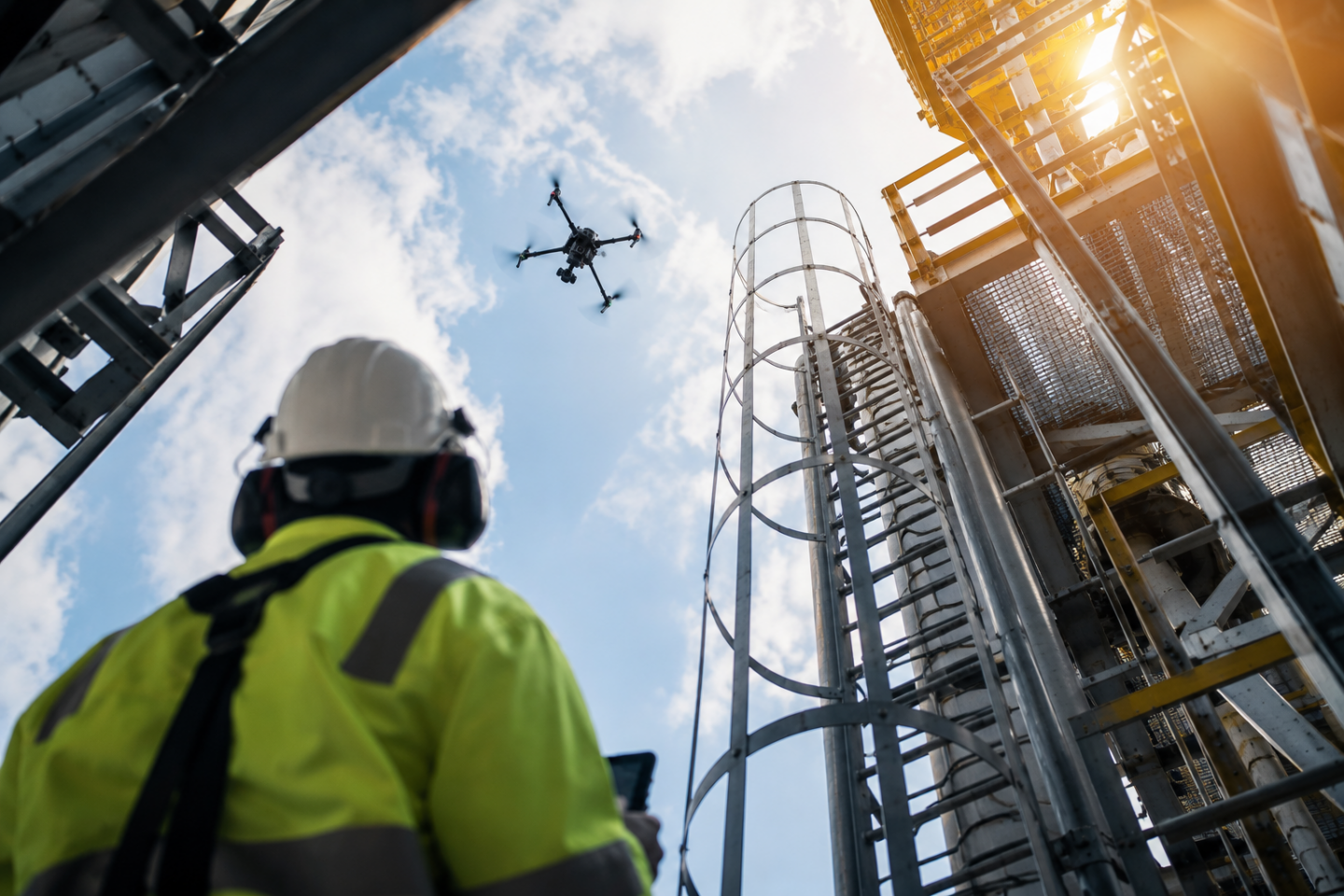
Critical infrastructure environments are often large, complex and difficult to assess quickly during an incident.
Whether the issue involves a perimeter breach, operational disruption, fire risk or technical failure, decision-makers frequently need accurate information within the first minutes to understand what is happening and how resources should be deployed.
For many organizations, this is becoming one of the key operational advantages of Drone As First Responder (DFR) systems.
By allowing drones to launch rapidly from fixed or remote locations, operators can gain live aerial visibility almost immediately after an alarm or incident is triggered. Instead of relying only on ground reports, teams can assess conditions in real time and make faster, more informed decisions.

For critical infrastructure operators, the benefits can be significant.
Drones can help inspect railway corridors, monitor port activity, assess damage after severe weather, verify alarms around industrial facilities and support emergency response in areas where access may be difficult or time-consuming. Thermal imaging, zoom cameras and automated flight paths provide operators with information that previously could take much longer to obtain.
As infrastructure systems become more connected and operational demands continue to increase, many organizations are now exploring how DFR capabilities can strengthen readiness, reduce response times and improve operational safety.
IXES2026 will focus on how unmanned technologies can support faster response, better situational awareness and safer operations across critical infrastructure sectors.
Authorities, infrastructure operators, technology providers and operational experts will come together to discuss how unmanned systems can support faster response, improved situational awareness and safer operations around critical infrastructure.
Read more and apply to attend:
https://www.uasnorway.no/ixes2026/