
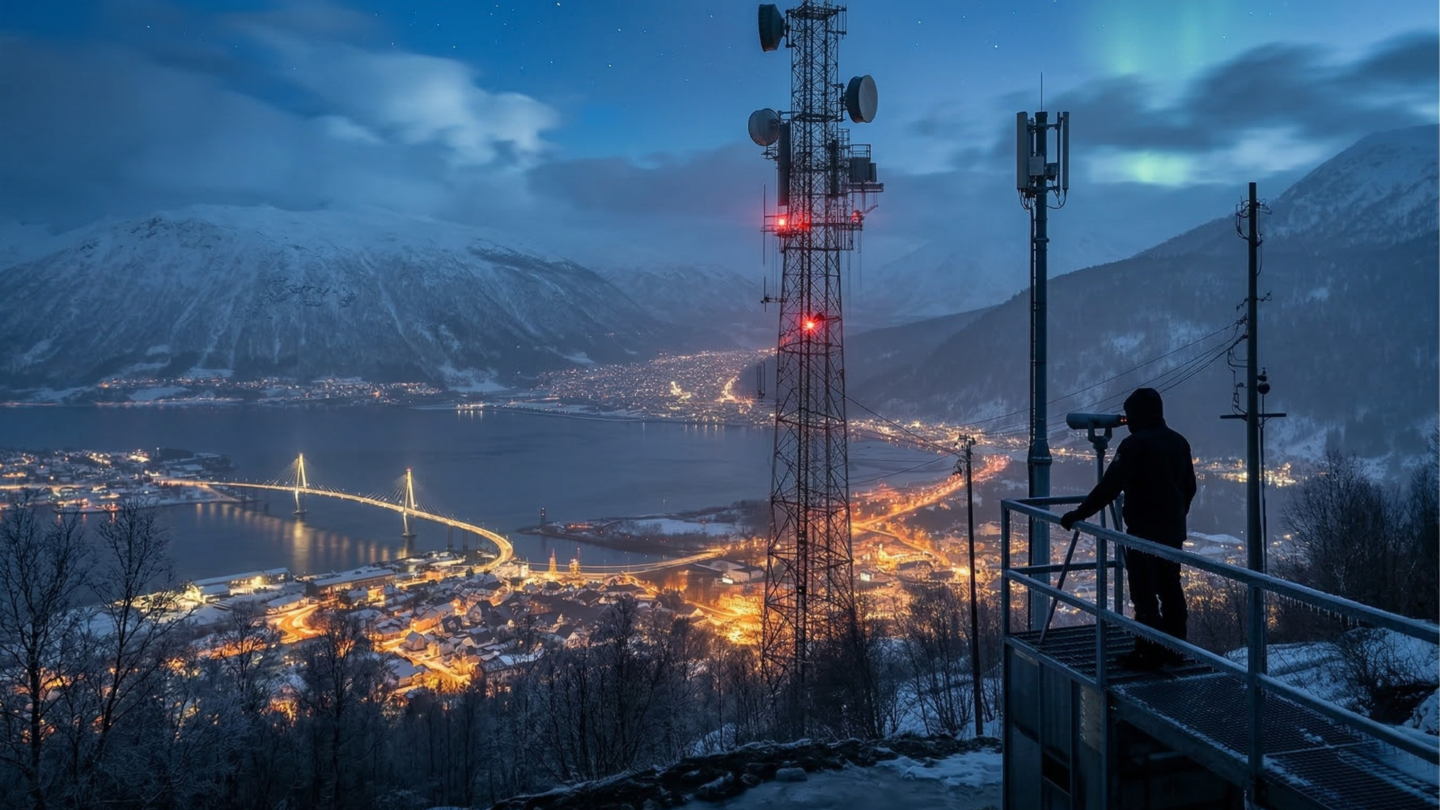
Can critical infrastructure really defend itself against drones?
INTERPOL exercise in Malmö will test the uncomfortable questions infrastructure owners must now confrontFor operators of critical infrastructure, drones represent a difficult and increasingly unavoidable question. Can your facility actually detect or potentially stop one?
Across Europe, energy plants, ports, refineries, airports, and industrial sites are becoming more dependent on digital systems, automation, and open airspace operations. At the same time, drones are becoming cheaper, easier to operate, and capable of flying long distances with minimal technical expertise. The result is a growing vulnerability that many infrastructure operators are only beginning to fully understand.
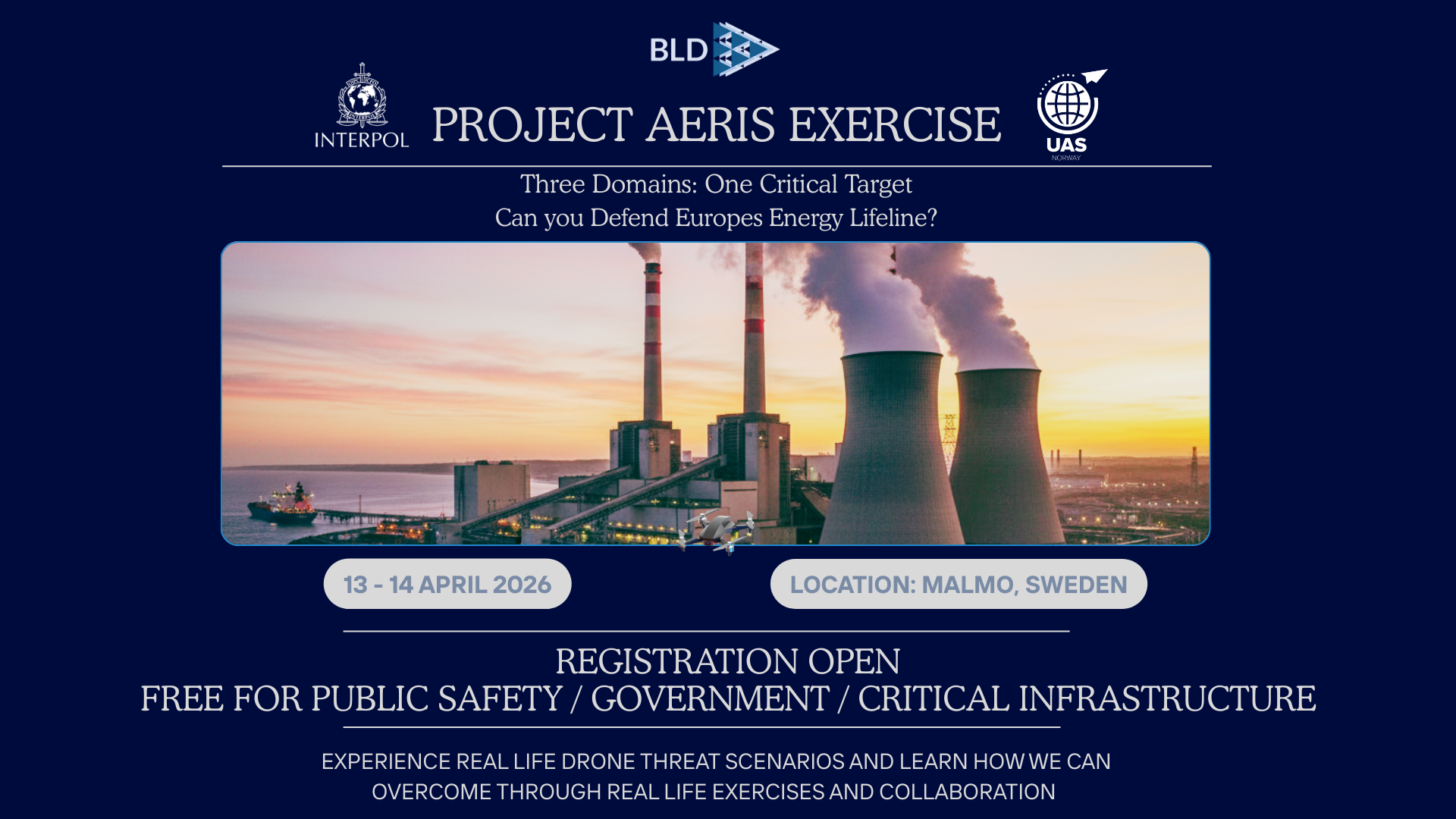
In April 2026, this challenge will be examined in detail when INTERPOL gathers international experts in Malmö, Sweden, for its first Table Top Exercise focused on drone incursions targeting critical infrastructure. The exercise will simulate realistic incidents in which drones appear over sensitive sites, forcing participants to examine how authorities and infrastructure operators respond when a threat suddenly emerges above their facilities.
To sign up and read more about the exercise – visit the website of the event here
The uncomfortable reality for infrastructure operators
For many operators of critical infrastructure, the drone threat sits in an uncomfortable grey zone. Facilities may be protected by fences, cameras, cybersecurity systems, and physical access controls. However, the airspace above them often remains largely unprotected.
Even when drones are detected, whether is is air, land or seabased, questions immediately arise. Who is responsible for responding? Can the operator intervene directly? Which authority has legal control of the airspace? And how quickly can the threat actually be neutralized?
In many cases, the answers are far from clear. Infrastructure operators are often the first to detect suspicious activity, but they may have limited authority to respond. Law enforcement agencies may have the legal mandate to act, yet they might not be physically present when the incident begins. This gap between detection and response is one of the central challenges the Malmö exercise aims to explore.
When minutes matter
Drone incidents develop quickly. A small unmanned aircraft can reach a facility within minutes and disappear just as fast. In some scenarios, the drone may be conducting surveillance. In others, it may be testing vulnerabilities or attempting to disrupt operations.
For infrastructure operators, the most difficult moment often occurs in the first few minutes of an incident. Is the drone harmless? Is it conducting reconnaissance? Or is it part of something more serious?
The ability to assess the situation quickly and coordinate with authorities can determine whether the incident remains a minor disturbance or escalates into a larger security event.
Technology alone is not enough
Many infrastructure operators are now exploring technologies designed to detect and counter drones. These include radio frequency sensors, radar systems, optical tracking tools, and electronic countermeasures.
However, technology alone rarely solves the problem. Deploying counter-drone systems raises complex legal and operational questions. In many jurisdictions, private operators cannot legally interfere with drones, even when they appear above sensitive sites.
This means infrastructure owners must work closely with regulators and law enforcement agencies to ensure that detection systems, response procedures, and legal authorities are aligned. Without that coordination, even the most advanced technology may provide little practical protection.
Why exercises like this matter
The Malmö exercise is designed to explore these challenges before a real crisis occurs. By working through realistic drone intrusion scenarios, participants can examine how infrastructure operators, law enforcement agencies, and regulators interact during an unfolding incident.
These discussions allow stakeholders to identify weaknesses in communication, authority, and response procedures. Just as importantly, they provide infrastructure operators with a clearer understanding of what is realistically possible when facing a drone intrusion.
A growing responsibility for infrastructure owners
Protecting critical infrastructure has always required cooperation between public authorities and private operators. The rise of drones adds a new layer of complexity to that relationship.
Facilities that once focused primarily on ground-based threats must now consider risks from above, while authorities must develop new capabilities to monitor and respond to increasingly accessible airborne technologies.
Exercises such as the one taking place in Malmö represent an important step toward addressing these challenges. They bring together the organizations responsible for protecting infrastructure with the agencies responsible for responding to threats.
Because when a drone appears above a critical facility, one question quickly becomes unavoidable.
Who is actually in control of the situation?
This article was written using AI and subsequently reviewed and quality-assured by UAS Norway’s content producer.
